What to grow
near lettuce.
Keep it cool.
Keep it reachable.
Keep the neighbors gentle.
Carrots, radishes, scallions, chives and a little dill make a useful starting list. Leave the big summer sprawl out of the lettuce’s way.
Find its neighbors
Let lettuce stay
the main crop.
Think narrow, quick or nearby. A companion earns its place by fitting the bed—not by appearing on a magic chart.

Radishes
A quick early crop between slower spots. Give both crops their room.
Take a look
Carrots
A nearby strip, rather than a crowded layer under the lettuce.
Take a look
Chives at the edge
A narrow edible edge, with room for the lettuce. Scallions are another option in this plan.
Take a lookA little dill can fit. Keep it from becoming a wall of foliage. Afternoon relief in heat is different from lettuce being smothered by a bigger crop.
A small salad garden.
Not a leafy traffic jam.
Arrangement only; not to scale. No plant counts, exact spacing or bed dimensions are implied.
Cooler timing.
Lettuce is a cool-season crop. Heat and a dry bed can make the plan harder to manage.
Steady moisture.
Avoid the swing between soggy and dried out. Keep checking conditions around the roots.
Small repeats.
Try small repeated plantings rather than one large all-at-once patch. Match timing to your conditions.
Tender leaves show
trouble quickly.
Check folds, leaf undersides and the soil surface. A hole or curled leaf is a clue, not a diagnosis.

Holes or slime trails?
Compare what is actually in the bed. Slugs are one possibility; inspect low hiding places and the soil surface.
Take a look
Tiny insects in the folds?
Look for the insects themselves and sticky residue. Confirm identification before choosing a response.
Take a lookOther clues worth checking
Young plants damaged at soil level can point toward cutworms. Pale winding leaf tunnels can suggest leafminers; earwigs are another possibility discussed in the source. Compare the actual damage and insect rather than treating every chewed leaf alike.
Don’t crowd it, then forget it.
Big summer plants, hard drying between waterings and damp hiding spots can all make the bed harder to manage. Review damage early; don’t assume a homemade spray is harmless.
Our garden began
with one row.
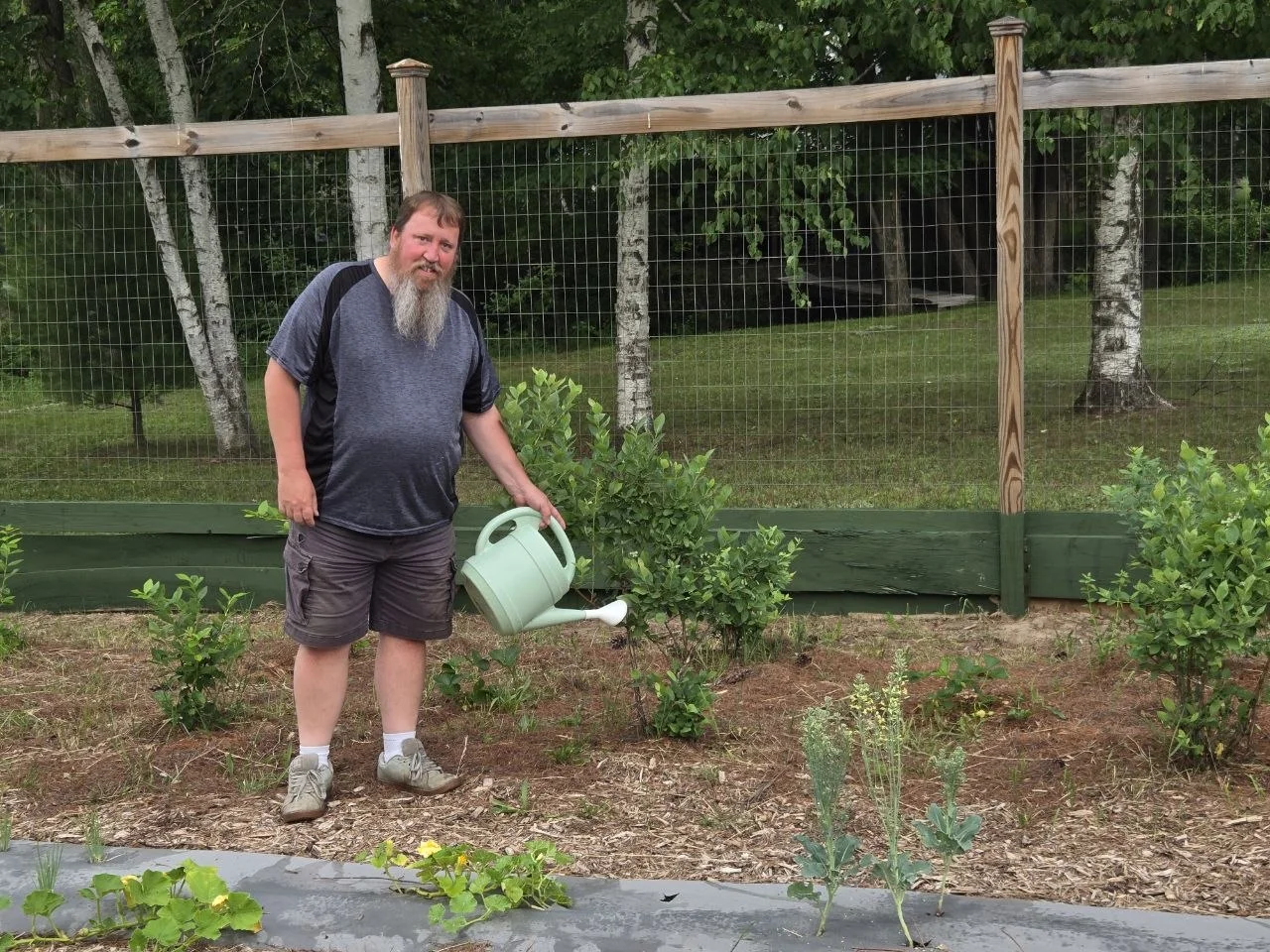
The cabin’s first trial row came with fencing work, a water pump and leaks to chase. It is the beginning of our garden story—not a documented trial of every lettuce companion.
Read our garden storyOne useful idea
leads to another.

Want more useful backyard stuff?
New growing ideas, projects, wildlife discoveries and the occasional thing we learned the hard way.