Jeff & Vanessa / A life in the making
Quiet Backyard LivingA place in progress.
A life taking shape.
Garden help / Look first. Then act.

What’s eating
the garden?

Clues first.
Miracle fixes last.

Start with what you can see. Then connect the plant, the damage and the actual visitor before choosing what to do.

Start with a clue
Green aphids clustered on a plant stem
Reference comparison: aphids on a stem. Not a diagnosis of your plant.
The observation shelf

What are
you noticing?

Choose a clue to narrow this shelf. It does not identify a pest or prescribe a treatment.

Showing all three observation groups.

A black slug on grass; species not established
A slug for comparison; the photographed species is not identified here.
Look / Leaves and soil

Holes, missing edges
or slime trails.

Inspect underneath leaves and around the soil. Slugs are one lettuce possibility; large missing tomato leaves may call for a different check.

Check lettuce help Check tomato help
Green aphids clustered on a plant stem
Green aphids on a plant stem · Petr Ganaj / Pexels
Look / Tender growth

Tiny insects
and sticky residue.

Compare the insects themselves, not just curled leaves. Aphids are one possibility in the crop guides. Check folds, stems and leaf undersides.

Choose the affected crop
Look / The plant base

A young plant
cut or collapsing.

Check the stem and soil surface. The crop guides discuss cutworms, but damage at the base still needs a closer comparison.

Open crop-specific help
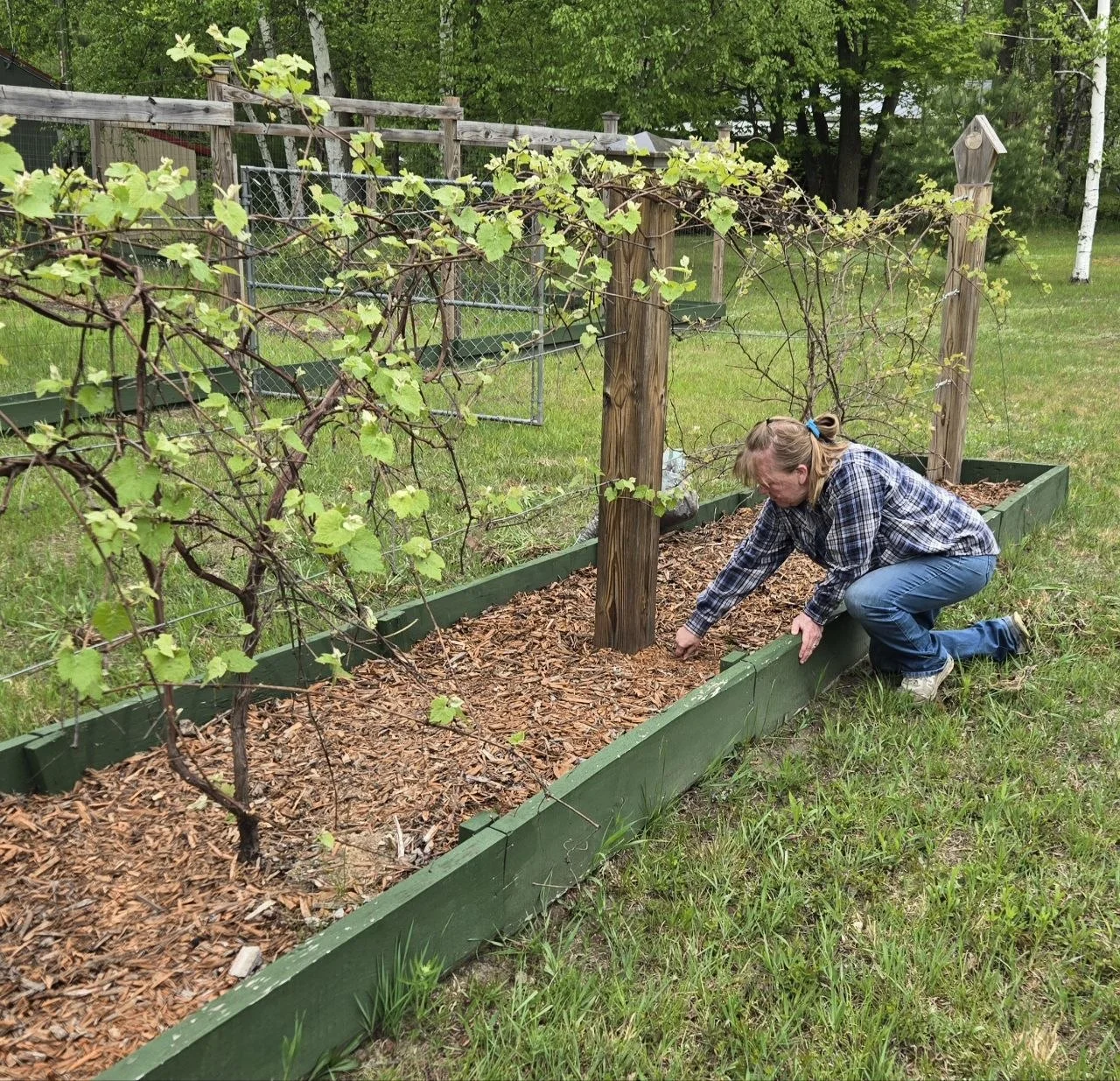
Vanessa working among the cabin vines in late May 2026
Our garden work. This is not a photograph of diagnosed pest damage.
Prevention / The unglamorous useful things

A calmer routine.
A closer eye.

  1. Look regularly. Notice change before a small patch becomes a whole-plant problem.
  2. Leave room. Crowded growth makes access and airflow harder.
  3. Keep water steady. Pay attention to plant and soil conditions rather than reacting only after stress appears.
  4. Use a physical barrier where it fits. Match covers or netting to the crop, pest and pollination needs.
  5. Act on an identification. Hand-picking and cleanup can be useful; what you remove should follow what you found.
Plants can support a garden

More life.
Fewer blanket promises.

Before the panic fix

Natural doesn’t mean
automatically right.

Do not add every companion at once, turn support plants into competitors, or assume a homemade spray is safe because it sounds old-fashioned.

Trap crops and repellence depend on a particular pest and plant relationship. Generic scented-herb lists are not a treatment plan.

Read the evidence-led companion-planting context from UMN Extension.
Vanessa tending the vines at the cabin
From Jeff & Vanessa’s actual backyard journal.
Our place / The continuing story

A garden is work
before it is a result.

The city beds needed another try, and the cabin vines still needed hands-on work. Follow the real progress. This journal connection is not a documented pest-treatment success.

Read our garden story