Grow Extra Herbs for Yourself, Friends, and a Couple Extra Dollars
A practical backyard guide to what extra herbs actually turn into, how people really use or move the overflow, and how a small herb setup can create kitchen value, gift value, and maybe a little extra money too.
This is not about turning your backyard into a farm stand.
It is about growing herbs in a way that gives you more than one kind of payoff: fresh use, drying, gifts, rooted starts, divisions, and maybe a few small sales if you end up with more than you need.
Most of the value comes from herbs you were already happy to grow anyway, and the best extra-herb setups usually start small enough that they still feel fun.
What extra herbs can actually become
Basil
Common overflow: rooted starts
Typical extra value: $20 to $50
Mint
Common overflow: tea bundles
Typical extra value: $20 to $40
Oregano
Common overflow: dried jars
Typical extra value: $20 to $30
Chives
Common overflow: divided clumps
Typical extra value: $10 to $20
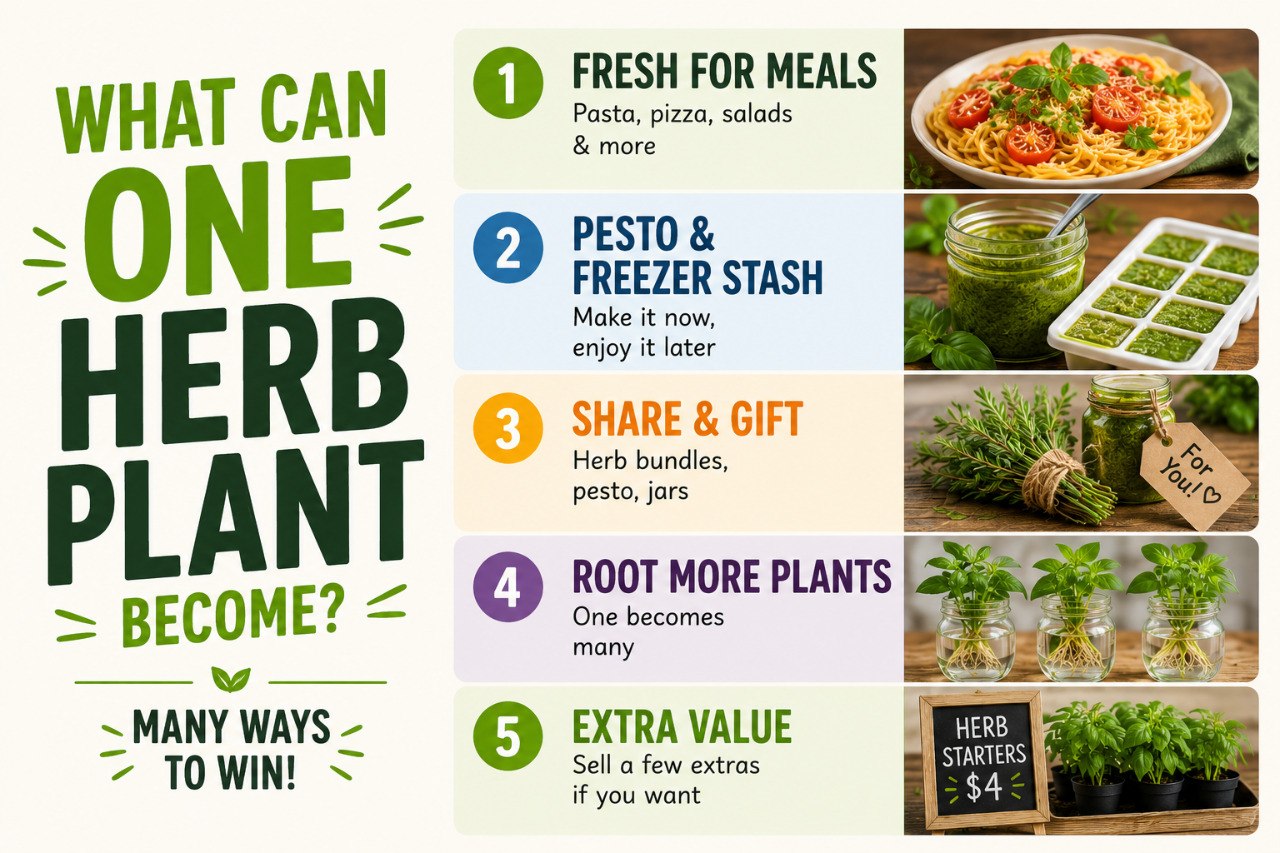
What one herb plant can become
The basil problem
One spring: 4 basil plants, about $20 total investment.
By mid-summer, you have more basil than you can eat fresh.
✅ 6 pesto batches = about $30 value
✅ 12 rooted cuttings = about $36 value
✅ 3 starts gifted to neighbors = about $9 gift value
Total value created: about $75
The mint monster
One mint plant can quietly become tea, garnish, drying herbs, and simple gift bundles.
✅ fresh tea and drinks for yourself
✅ dried mint for later
✅ 10 tea bundles × $4 = about $40
The oregano drying rack
One oregano plant can quietly fill a surprising number of little jars.
✅ one drying rack
✅ 8 to 10 spice jars
Total value created: about $24 to $30
Dividing chives
Chives do not look flashy, but the easiest value often shows up later.
✅ keep one clump
✅ split the rest
✅ 3 extra divisions × $4 = $12
Backyard value ladder
Level 1, use it yourself
Save money by replacing the herbs you would have bought anyway. This is usually the biggest and easiest win.
Level 2, give extras away
Herb bundles, starts, and jars of dried herbs make easy neighbor gifts and make the garden feel generous.
Level 3, trade extras
Plants, eggs, produce, and other backyard swaps all count as real value even if no cash changes hands.
Level 4, sell occasional extras
Think small real backyard money, not business fantasy money. A little extra is the goal here.
What moves fastest
🥇 Basil starts
Easy to understand and easy to hand to someone who wants basil right now.
🥈 Mint tea bundles
Simple, familiar, and easy to explain.
🥉 Chive divisions
Quiet, practical value for people who already garden.
4️⃣ Oregano jars
Easy pantry value if the drying part was done well.
What usually works best
Start with herbs people already understand
Basil, mint, oregano, thyme, parsley, and chives are easier to use, easier to explain, and easier to hand off than weird niche herbs.
Use your own share first
It is easier to feel good about extra herb value when you already got the kitchen payoff you wanted out of the plant.
Move the real extra while it still looks good
Fresh herbs, starts, and bundles are easiest to move when they still look lively, clean, and worth taking home.
Keep the format simple
Fresh bunches, rooted starts, tea bundles, dried jars, and divided clumps usually work better than complicated products.
What usually doesn’t work
Exotic herbs nobody recognizes
Most people move faster toward herbs they already know how to use.
Giant harvests with no plan
Overflow is only exciting if you know what you want to do with it.
Drying herbs that dry poorly
Not every herb is worth turning into a jar.
Growing 40 basil plants because the internet said so
Small, manageable, and useful usually beats overgrown and overwhelming.
What I would actually grow
4 basil plants
For kitchen use, pesto, rooted starts, and quick fresh overflow.
1 mint container
For tea, drinks, drying, and gift bundles.
2 oregano plants
For drying and long pantry value.
1 thyme plant and 1 chive clump
For steady kitchen use, drying, and future divisions.
The biggest value usually is not selling
A basil plant that keeps you from buying basil all summer has already done something useful.
The occasional rooted start, tea bundle, dried jar, or divided clump is usually extra value on top of that, not the main point.
This page works best if you read it as a backyard value page, not a tiny-business promise page.
🌿 Enjoying the Herb Hub?
Get new herb guides, backyard ideas, projects, and updates from around the yard.
No spam. Just the next good thing when it’s ready.