Best Herbs for Beginners, If You Want Herbs That Are Easy to Grow and Actually Useful

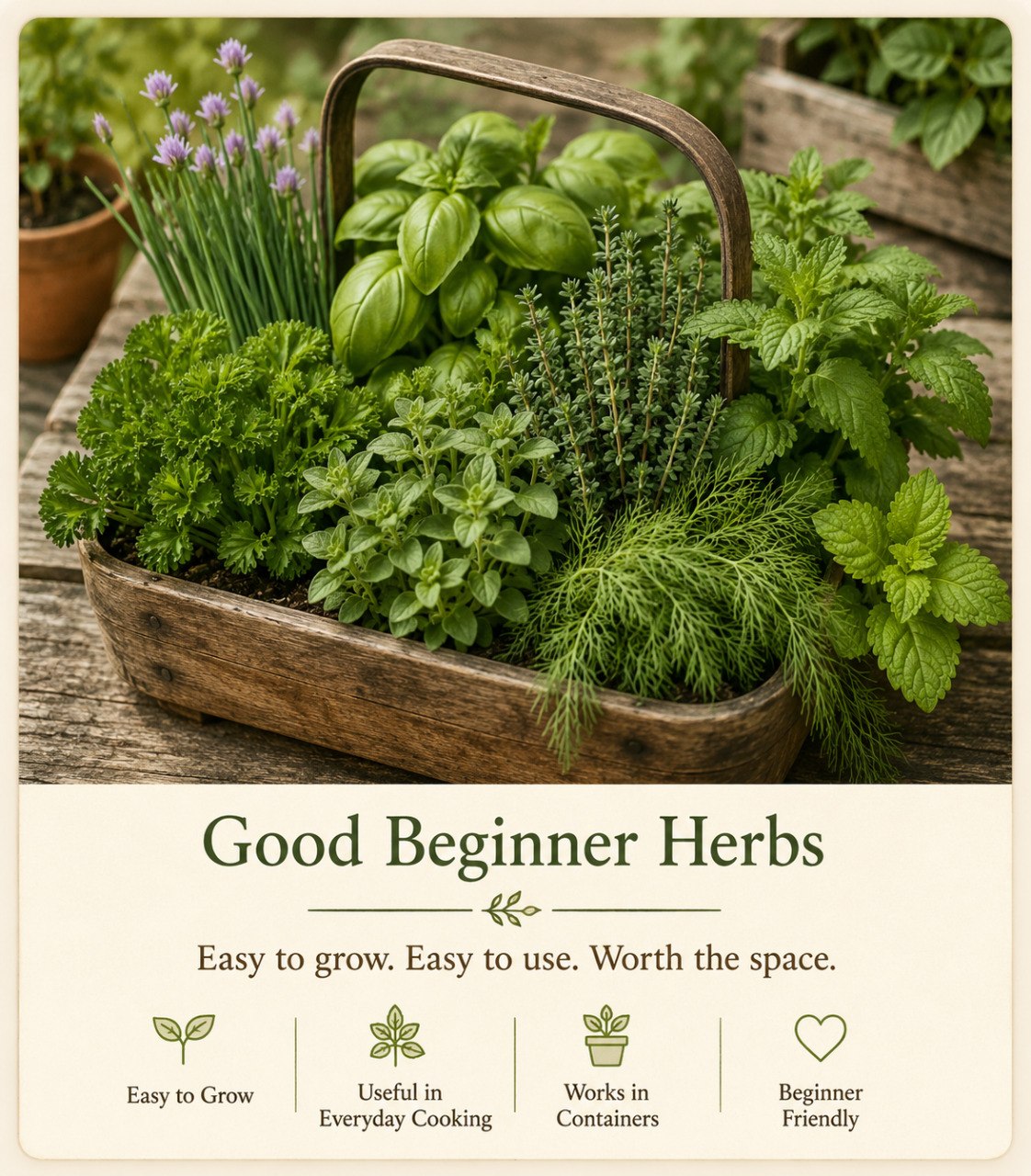
Good Beginner Herbs graphic showing a rustic basket of beginner-friendly herbs with notes that they are easy to grow, easy to use, worth the space, and beginner friendly

If you are brand new to herbs, the goal is not to grow the fanciest collection. It is to start with herbs that forgive mistakes, give you quick wins, and actually get used in real life. These are the herbs I would start with if you want the easiest path into growing something useful.

Herbs are one of the best places to begin because they do not need a giant garden, they fit in containers, and many of them earn their space fast. A little basil, chives, parsley, oregano, or thyme can make a small bed or patio pot feel more productive almost right away.

That said, not every herb is equally beginner-friendly. Some are slower, fussier, or just not that useful unless you already cook with them a lot. So this page is about the herbs that give beginners the best chance of success and the best chance of actually wanting to keep going.

The 7 herbs I would start with first

Fast, satisfying, and easy to understand

1. Basil

Basil is one of the quickest herbs to make a beginner feel like this whole herb thing was a good idea. It grows fast, tastes obvious, and gives you that nice feeling of being able to walk outside, pinch a few leaves, and immediately use them.

🌱 Seed or Starter Plant ~ Either works, but a starter plant gives faster success.
β˜€οΈ Sunlight ~ Full sun.
πŸ’§ Watering ~ Likes regular water. Do not let it stay bone-dry too long.
πŸͺ΄ Container Size ~ Medium pot.
🌿 Growth Habit ~ Upright and leafy. Likes regular picking.
🍽️ Best Use ~ Fresh cooking, sauces, salads, sandwiches.
⚠️ Watch Out For ~ Cold weather and frost can knock it back fast.
Tidy, forgiving, and dependable

2. Chives

Chives are one of those quiet little herbs that do not show off much, but they keep proving their worth. They are easy to snip, easy to fit into a pot or bed edge, and the kind of herb a beginner is actually likely to keep using.

🌱 Seed or Starter Plant ~ Starter plant is easiest, though seed is possible.
β˜€οΈ Sunlight ~ Full sun to part sun.
πŸ’§ Watering ~ Moderate water. Do not keep soggy.
πŸͺ΄ Container Size ~ Small to medium pot.
🌿 Growth Habit ~ Tidy clump.
🍽️ Best Use ~ Eggs, potatoes, dips, and everyday snipping.
⚠️ Watch Out For ~ Not dramatic, just dependable. Do not overlook it because it seems plain.
Hard to kill, easy to enjoy

3. Mint

Mint gives a beginner fast reward. It smells good, grows strongly, and makes tea and summer drinks feel easy. It is one of the most generous herbs you can grow, as long as you respect the fact that it wants to spread.

🌱 Seed or Starter Plant ~ Starter plant is easiest.
β˜€οΈ Sunlight ~ Part sun to full sun.
πŸ’§ Watering ~ Likes consistent moisture.
πŸͺ΄ Container Size ~ Medium pot, preferably its own pot.
🌿 Growth Habit ~ Spreading and aggressive.
🍽️ Best Use ~ Tea, drinks, garnish, fresh snipping.
⚠️ Watch Out For ~ Do not plant it loose in the ground unless you want it everywhere.
More useful than people give it credit for

4. Parsley

Parsley is one of the most practical herbs you can grow because it slips into so many normal meals. It is not flashy, but it is the kind of herb that starts earning its keep once you realize how often you reach for it.

🌱 Seed or Starter Plant ~ Starter plant is easiest. Seed works but is slower.
β˜€οΈ Sunlight ~ Full sun to part sun.
πŸ’§ Watering ~ Likes steady moisture.
πŸͺ΄ Container Size ~ Medium pot.
🌿 Growth Habit ~ Leafy mound.
🍽️ Best Use ~ Soups, potatoes, sauces, eggs, and general cooking.
⚠️ Watch Out For ~ Slower to get moving than basil or mint.
A very strong long-term workhorse

5. Oregano

Oregano is one of the easiest herbs to get repeat value from because it is useful fresh, useful dried, and not very needy once it gets going. If you want an herb that feels like a smart long-game plant, this is one of the best.

🌱 Seed or Starter Plant ~ Starter plant is easiest.
β˜€οΈ Sunlight ~ Full sun.
πŸ’§ Watering ~ Let it dry a bit between waterings.
πŸͺ΄ Container Size ~ Medium pot.
🌿 Growth Habit ~ Low, spreading, bushy.
🍽️ Best Use ~ Sauces, pizza, drying, savory cooking.
⚠️ Watch Out For ~ Can get woody or messy if you never trim it.
Compact, hardy, and low-drama

6. Thyme

Thyme is a great herb for people who do better with calm, compact plants than with wild growers. It smells good, looks neat, and does not demand constant attention, which makes it a very beginner-friendly little workhorse.

🌱 Seed or Starter Plant ~ Starter plant is easiest.
β˜€οΈ Sunlight ~ Full sun.
πŸ’§ Watering ~ Likes to dry a bit between waterings.
πŸͺ΄ Container Size ~ Small to medium pot.
🌿 Growth Habit ~ Low and tidy, sometimes trailing.
🍽️ Best Use ~ Cooking, seasoning, small everyday snips.
⚠️ Watch Out For ~ It dislikes soggy soil more than a little neglect.
Fast and fun if you like bold flavor

7. Dill

Dill is a fun beginner herb because it grows fast and feels a little different from the others. It is airy, flavorful, and rewarding if you like pickles, potato dishes, or that fresh dill smell. It also helps show beginners that not all herbs behave the same way.

🌱 Seed or Starter Plant ~ Seed is easy.
β˜€οΈ Sunlight ~ Full sun.
πŸ’§ Watering ~ Likes regular water while it is actively growing.
πŸͺ΄ Container Size ~ Medium to deeper pot.
🌿 Growth Habit ~ Tall, airy, and feathery.
🍽️ Best Use ~ Pickles, fish, potatoes, and fresh flavor.
⚠️ Watch Out For ~ Can bolt faster in heat and may need replanting.

Bonus herb: lemon balm. If you want one extra herb that feels cheerful, fragrant, and calming, lemon balm is a really nice one. It is easy to grow, pleasant to brush against, good for tea, and a good fit for the kind of backyard life Quiet Backyard Living is really about.

Did you know?

Some of the easiest herbs for beginners are also some of the best ones to dry later, especially oregano, thyme, and mint.

See which herbs are worth drying β†’

If you are completely new, start with these first

Easiest first wins

  • basil
  • chives
  • mint

Best low-fuss long-term herbs

  • oregano
  • thyme
  • chives

Beginner mistakes to avoid

If you start with just a few herbs you will really use, and you pay attention to how each one behaves, you will learn a lot fast without making it feel like another project you have to manage perfectly.

Keep reading in the Herb Hub

The Backyard Herb Hub

The clean herb directory so you can follow the next herb path that fits what you need.

The Herbs That Quietly Save You the Most Money

A practical look at which herbs quietly earn their space best.

Best Herbs to Dry if You Want the Most Value from a Small Space

Which herbs keep their usefulness best once you dry them.

Best Herbs for Small Spaces

If you are starting with just a patio, a few pots, or one bright window, this is the next useful step.

How to Grow Extra Herbs for Yourself, Friends, and Maybe a Little Extra Income

A deeper look at what happens when you grow more herbs than you need.

Bottom line

If you are new to herbs, do not start by trying to grow everything. Start with the herbs that are easy to grow, easy to use, and easy to feel good about. A few right picks can give you fresh flavor, more confidence, and a small win that makes you want to keep growing.

Back to the Herb Hub