It was time to put my newly acquired skills to the test
By this point, it was time to stop just talking about systems and actually build them.
I had some basic wiring and plumbing knowledge already, so it was not like I was starting completely from scratch. But if we were going to have the basic necessities of life at the cabin, then I was going to have to get better and learn fast.
So over the next couple of trips, that is exactly what we did.
We wired. We plumbed. We started putting the systems in place.
And yes, there were a lot of videos involved. A whole lot of videos.
I still needed to install breakers, run wiring, and set up separate lines for the soon-to-be-installed pressure tank and pump system. This was not just a barrel and a hose anymore. This was the point where the place had to start acting more like a livable cabin and less like a rough camping setup.
At the same time, I also routed the water from the eavestrough into the tank. I had raised the tank up off the ground onto a platform, partly because I was already thinking ahead about freezing and how this whole setup would need to work in the real world, not just in theory. I also installed a shutoff valve on the tank. That way I could at least start catching water while still working through the rest of the electrical and plumbing.
Step by step, it was starting to become something.
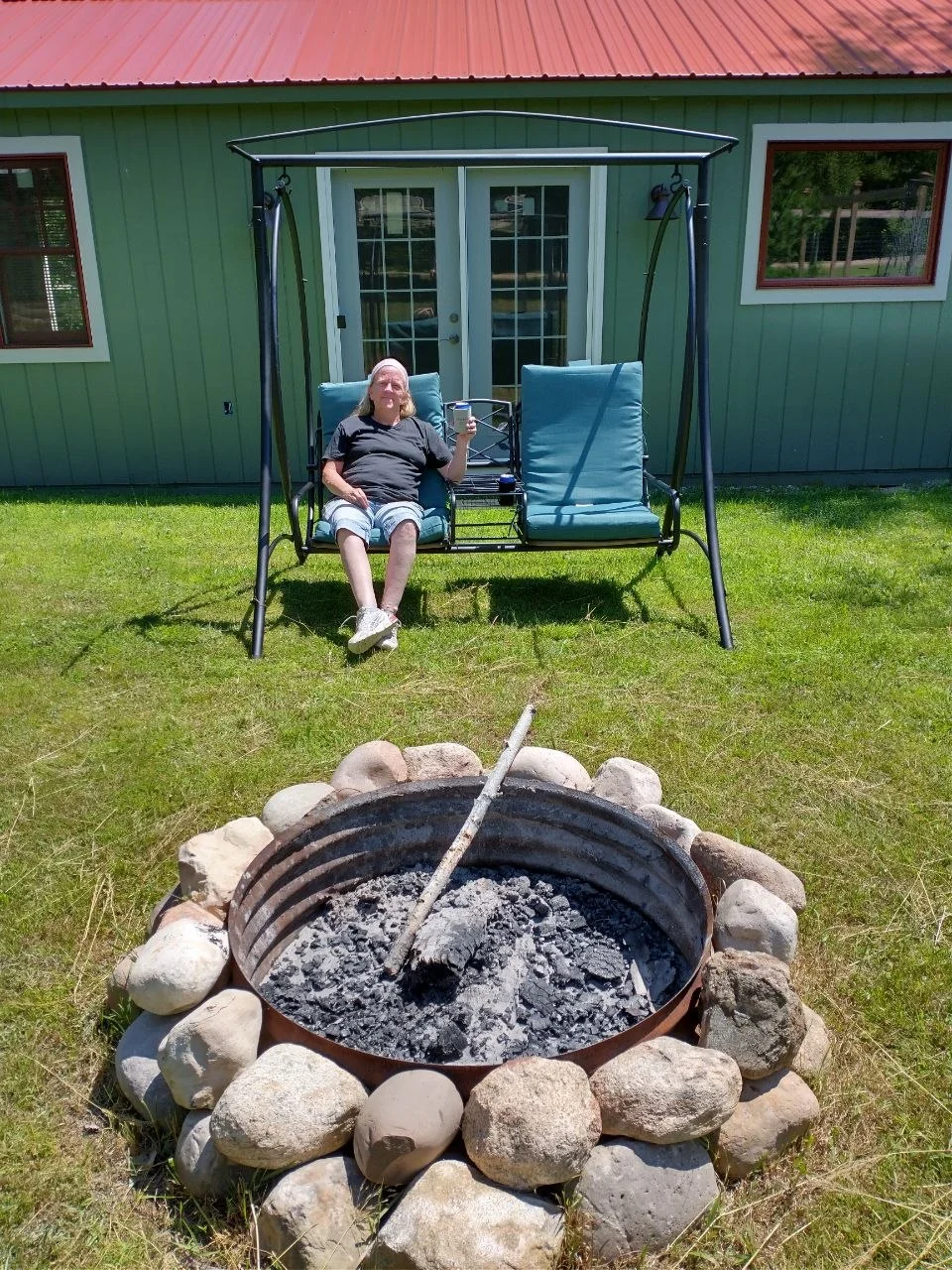
We were still having fun. We were still enjoying bonfires. We were still enjoying cabin time.
But it also felt like all we did when we were up there was work.
And honestly, in a lot of ways, that was true.
When we were at the property, we were working. And when we were back in the city, I was still studying, planning, and trying to figure things out before the next trip. That became part of the rhythm too, work at the cabin, then go home and learn what I needed to learn before coming back to tackle the next piece.
Still, the feeling around it stayed positive.
It was a challenge, but it was our challenge.
And who knew it was this much work just to get the kind of things people take for granted every day, a shower, running water, basic plumbing, and the everyday necessities that make a place actually livable.
It is one thing to collect rainwater.
It is a whole different beast to pressurize that system so it actually works in the house, and then figure out how to get the wastewater back out of the house.
That part was harder than people think.
Challenging, yes. But rewarding too.
Because every piece we figured out made the place feel a little more real, a little more usable, and a little closer to the version we had been imagining from the beginning.
It was also during those early spring trips that the little wildlife around the property started becoming part of the story.
The chipmunks and squirrels would sit nearby and watch us while we worked. At least, that is how it felt. Like they were studying us, probably wondering what these crazy humans were doing now.
And they were not the only ones.
We were seeing birds everywhere, along with rabbits, deer, turkeys, and all kinds of other little signs that the place was more alive than we had first realized. The more time we spent there, the more it felt like we were not just working on a property. We were stepping into a place that already had a whole cast of regulars.
So we did what seemed fun.
We started feeding them.
And yes, they started coming around more often after that, especially the little chipmunks. Before long, some of them would come surprisingly close, almost eating right out of our hands. One chipmunk in particular did not seem very scared of us at all. He was sweet, curious, and seemed to learn pretty quickly that when we were at the cabin, treats were usually part of the deal.
So we named him Chippy.
And in a lot of ways, that was the beginning of a whole new side of this story.
Because Chippy was not just a cute little visitor. He became part of the reason I started building things for my little friends. Once those chipmunks, squirrels, and birds started feeling like regular characters in our cabin life, it felt natural to start making the place more fun for them too.
That little relationship changed the way I looked at the property.
It was not just about fixing up a cabin anymore.
It was also about sharing the place with the wildlife that had already been there long before we arrived.
And next time, sometime around late July or early August, we were going to fire it all up.
And by that, I mean a real pressurized, functioning system.
Not just catching water. Not just talking about plumbing. Not just pieces and parts scattered around with good intentions.
An actual system that worked.
Want to see what happens next?
We’re still building our Happy Place. Leave your email and we’ll let you know when the next chapter is ready.